
Community Post
Complete Guide Erp Implementation Planning To Go Live
Legacy blog content imported from static page.
ERP Implementation
The Complete Guide to ERP Implementation: From Planning to Go-Live
By ATW Team
Published:
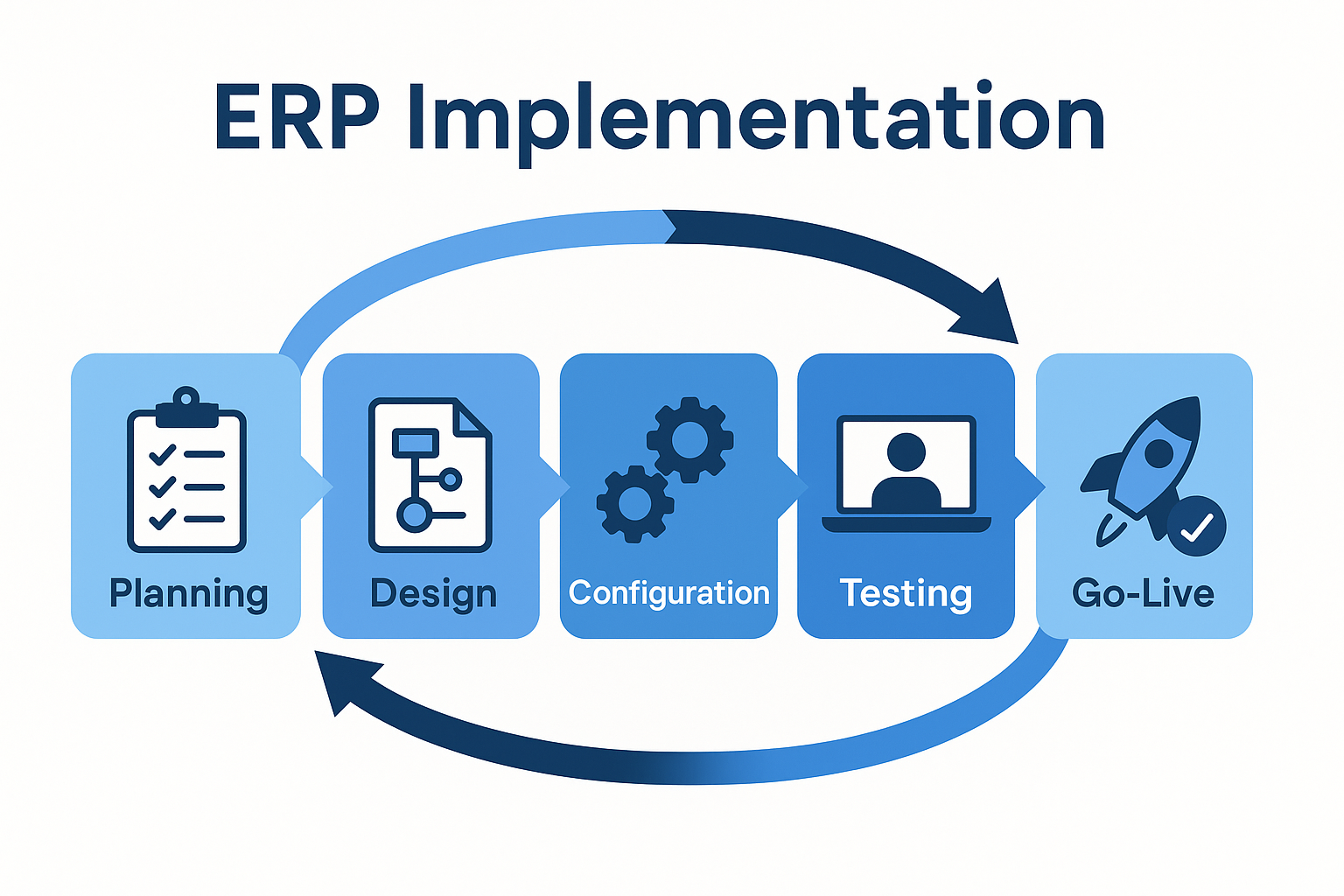
Implementing an ERP system is one of the most significant investments a business can make. While the benefits are substantial, the journey from initial planning to successful go-live requires careful preparation, strategic execution, and ongoing management. This comprehensive guide will walk you through every phase of ERP implementation, ensuring your project succeeds.
Phase 1: Pre-Implementation Planning (Months 1-2)
Business Process Assessment: Document current processes, identify pain points, and define improvement goals. This foundation will guide your ERP selection and configuration.
Stakeholder Alignment: Secure executive sponsorship, form a steering committee, and establish clear project governance. Success requires buy-in from all levels of the organization.
Requirements Gathering: Define functional requirements, technical specifications, and integration needs. Be thorough - changing requirements later can significantly impact timeline and budget.
Phase 2: Solution Selection and Design (Months 2-4)
Vendor Evaluation: Research ERP solutions, request demos, and evaluate against your requirements. Consider total cost of ownership, not just licensing fees.
Implementation Partner Selection: Choose a partner with industry expertise and proven implementation methodology. ATW specializes in ERP implementations across various industries.
Solution Design: Work with your implementation partner to design the system architecture, data models, and business process workflows.
Phase 3: Development and Configuration (Months 4-8)
System Configuration: Configure the ERP system according to your business requirements, including modules, workflows, and user interfaces.
Custom Development: Develop any custom integrations, reports, or functionality required for your specific business needs.
Data Migration Planning: Plan the migration of existing data, ensuring data quality and integrity throughout the process.
Phase 4: Testing and Training (Months 8-10)
System Testing: Conduct comprehensive testing including unit testing, integration testing, and user acceptance testing.
User Training: Develop training materials and conduct training sessions for all users. Consider different learning styles and job functions.
Go-Live Preparation: Finalize go-live checklist, prepare support resources, and establish post-go-live support procedures.
Phase 5: Go-Live and Post-Implementation (Months 10-12)
Go-Live Execution: Execute the go-live plan, monitor system performance, and address any immediate issues that arise.
Post-Go-Live Support: Provide intensive support during the initial weeks, gradually reducing support as users become more comfortable.
Continuous Improvement: Monitor system performance, gather user feedback, and implement ongoing improvements and optimizations.
Critical Success Factors
- Executive Sponsorship: Strong leadership support is essential for success
- Change Management: Prepare your organization for the changes ahead
- Realistic Timeline: Don't rush implementation - quality takes time
- User Involvement: Include end users in design and testing phases
- Data Quality: Clean, accurate data is crucial for success
Ready to Start Your ERP Implementation?
ATW has the expertise and experience to guide you through every phase of ERP implementation. Contact us today to discuss your project.
Start Your Implementation